Description
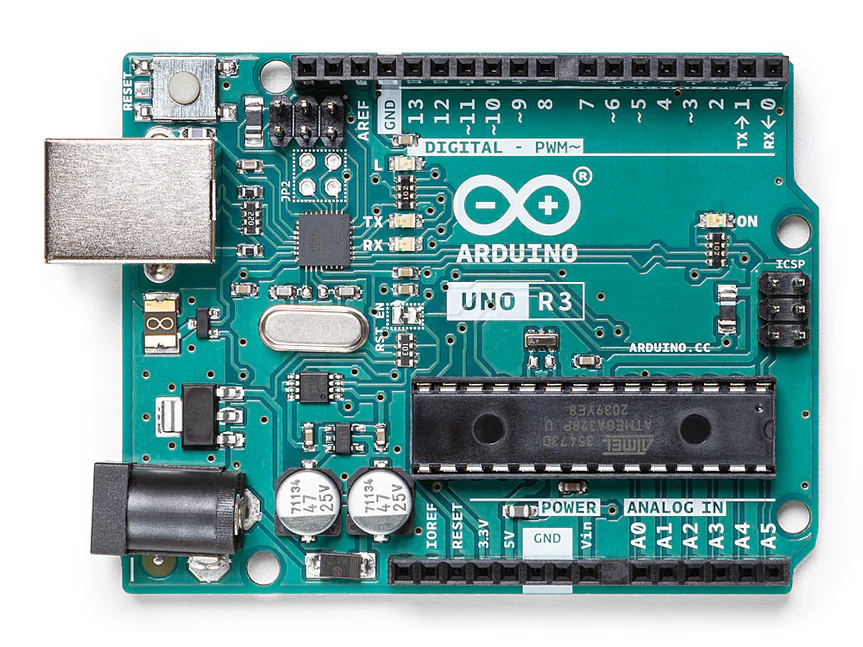
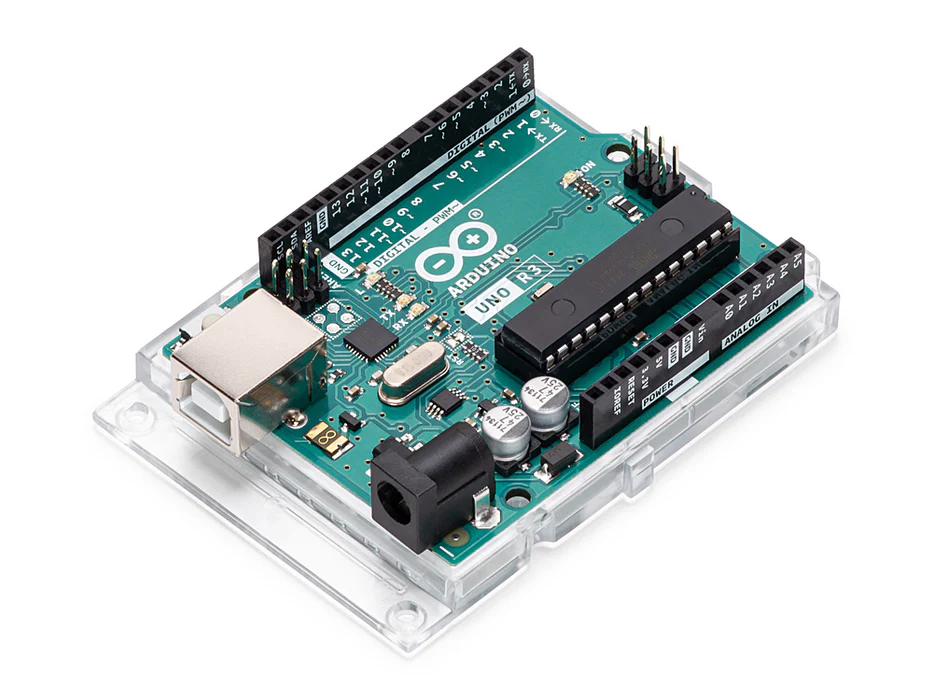
The Arduino Uno R3 is one of the most widely used open-source microcontroller boards available today, built around the ATmega328P processor. It is designed to provide a straightforward and accessible platform for developing embedded systems, whether for educational purposes, rapid prototyping, or production-ready projects.
The board operates at 5V and supports an input voltage range of 7 to 12 volts. It offers 14 digital input/output pins, six of which support PWM output, along with six analog input pins. With 32KB of flash memory, 2KB of SRAM, and a 16MHz crystal oscillator, the Uno provides a stable and capable environment for a broad range of applications.
Programming is done through the Arduino IDE, which is free, cross-platform, and supported on Windows, macOS, and Linux. The board connects to a computer via a standard USB Type-B cable, which also powers the board during development. Its bootloader allows sketches to be uploaded directly without the need for an external programmer.
The Arduino Uno is compatible with the majority of Arduino shields, enabling hardware expansion for motor control, wireless communication, display interfaces, sensor integration, and more. An extensive library ecosystem and a large global community make development faster and troubleshooting more accessible.
Typical applications include robotics, home automation, environmental monitoring, industrial control prototyping, wearable electronics, and educational electronics courses. Its straightforward design and well-documented architecture make it an industry standard for anyone working with microcontrollers.
Technical Specifications:
– Microcontroller: ATmega328P
– Operating Voltage: 5V
– Recommended Input Voltage: 7 to 12V
– Digital I/O Pins: 14 (6 PWM)
– Analog Input Pins: 6
– Flash Memory: 32KB
– SRAM: 2KB
– EEPROM: 1KB
– Clock Speed: 16MHz
– USB Interface: Type-B
Reviews
There are no reviews yet.